Heel Pain
In today’s busy and hectic lifestyle there are many other causes of foot pain which can be treated.
Heel pain is a very common foot problem. The patient usually feels pain either under the heel (planter fasciitis) or just behind it (Achilles tendinitis), where the Achilles tendon connects to the heel bone.
In the majority of cases heel pain has a mechanical cause. It may also be caused by arthritis, infection, an autoimmune problem, trauma, a neurological problem, or some other systemic condition (condition that affects the whole body).
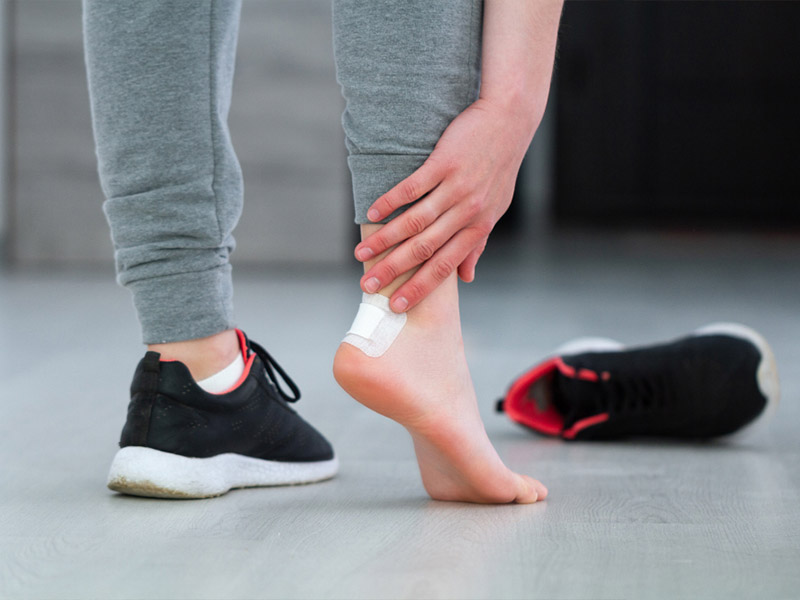
What are the signs and symptoms of heel pain?
Pain typically comes on gradually, with no injury to the affected area. It is frequently triggered by wearing a flat shoe, such as flip-flop or sandals. Flat footwear may stretch the plantar fascia to such an extent that the area becomes swollen (inflamed).
In most cases the pain is under the foot, towards the front of the heel.
Pain after rest – symptoms tend to be worse just after getting out of bed in the morning, and after a period of rest during the day.
After a bit of activity symptoms often improve a bit. However, they may worsen again towards the end of the day.
What are the causes of heel pain?
Heel pain is not usually caused by a single injury, such as a twist or fall, but rather the result of repetitive stress and pounding of the heel.
The most common causes of heel pain are:
- Plantar fasciitis – inflammation of the plantar fascia.
- Heel bursitis – inflammation of the back of the heel, the bursa (a fibrous sac full of fluid).
- Heel bumps (pump bumps) – common in teenagers. The heel bone is not yet fully mature and rubs excessively, resulting in the formation of too much bone.
- Tarsal tunnel syndrome – a large nerve in the back of the foot becomes pinched, or entrapped (compressed).
- Chronic inflammation of the heel pad – caused either by the heel pad becoming too thin, or heavy footsteps.
- Stress fracture – this is a fracture caused by repetitive stress, commonly caused by strenuous exercise, sports, or heavy manual work. Runners are particularly prone to stress fracture in the metatarsal bones of the foot.
- Severs disease (calcaneal apophysitis) – the most common cause of heel pain in child/teenage athletes, caused by overuse and repetitive microtrauma of the growth plates of the calcaneus (heel bone). Children aged from 7-15 are most commonly affected.
- Achilles tendonosis (degenerative tendinopathy) – also referred to as tendonitis, tendinosis, and tendinopathy. A chronic (long-term) condition associated with the progressive degeneration of the Achilles tendon.
Diagnosing heel pain
A podiatrist will carry out a physical examination, and ask pertinent questions about the pain. The ppodiatrist will also ask the patient how much walking and standing the patient does, what type of footwear is worn, and details of the his/her medical history. Often this is enough to make a diagnosis.
Sometimes Xrays, CT scans, ultrasounds or MRI’s are required to confirm the diagnosis.
What are the treatment options for heel pain?
Treatment for plantar fasciitis – the vast majority of patients recover with conservative treatments:
- Non-steroidal anti-inflammatory drugs (NSAIDs)
- Physical therapy : exercises which stretch the plantar fascia and Achilles tendon, as well as strengthening the lower leg muscles, resulting in better stabilization of the ankle and heel.
- Night splints – the splint is fitted to the calf and foot; the patient keeps it on during sleep. Overnight the plantar fascia and Achilles tendon are held in a lengthened position; this stretches them.
- Orthotics – insoles and orthotics can be useful to correct foot faults, as well as cushioning and cradling the arch during the healing process.
- Footwear – the podiatrist will discuss what footwear is best suited to reduce the pain and prevent re-occurrences
- Initial Home care
- Rest – avoid running or standing for long periods, or walking on hard surfaces. Avoid activities which may stress the heels.
- Ice – place an ice-pack on the affected area for about 15 minutes. Do not place bare ice directly onto skin.
- Footwear – proper-fitting shoes that provide good support are crucial.
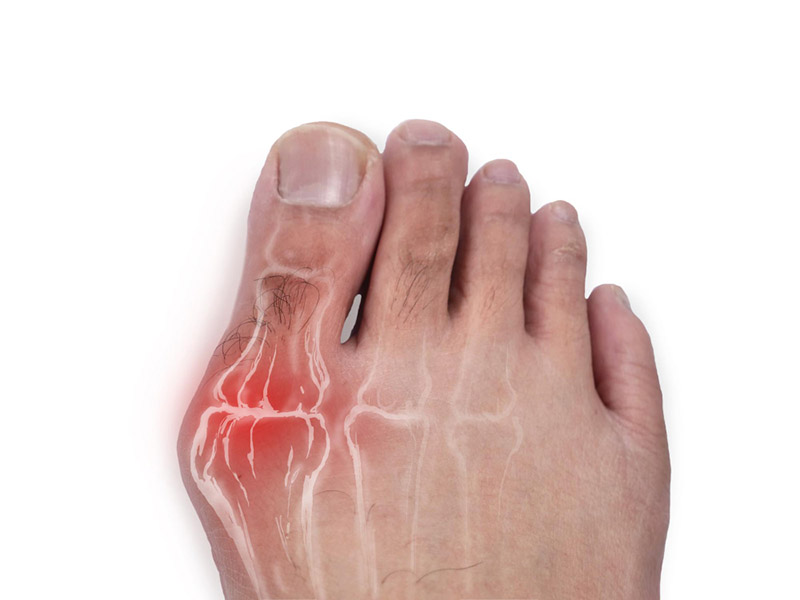
Bunions
In general terms, most people think of bunions as a painful bump on the side of their foot. This is true, in part.
It’s a bit confusing, but the word bunion actually refers to three different medical conditions: soft tissue enlargement, hallux abducto valgus and metatarsus primus varus. All three of these problems usually occur together and are what most people think of as a typical “bunion.”
Causes of “Bunions”
- Are shoes to blame? Sometimes.
- Family history of bunions. You do not inherit the bunions, but you inherit the foot type that may lead to bunions. The shape and lenght of your bones in the feet and the way you walk are all inherited.
- Other possible causes of bunions:
- Shoes (especially high-heeled shoes)
- Flat feet (pes planus) and pronation (foot rolls in)
- Metatarsus primus varus (first metatarsal bone rotates)
- Short or long first metatarsal bone
- Round first metatarsal head
- Hypermobility (excess motion) of the metatarsocuneiform joint
- Amputation of the second toe
- Neuromuscular disorders (cerebral palsy, poliomyelitis)
- Rheumatoid arthritis
- Contracture (shortening) of the achilles tendon
- Ruptured posterior tibialis tendon
- Ehlers-Danlos syndrome (hyperelasticity)
Signs & Symptoms of “Bunions”
- Bunions are usually termed mild, moderate or severe. Just because you have a bunion does not mean you have to have pain. There are some people with very severe bunions and no pain and people with mild bunions and a lot of pain.
- Pain, swelling or redness on the inside of your foot at the big toe joint
- Numbness or burning in the big toe
- Pain while wearing shoes – especially shoes too narrow or with high heels
- Pain during activities
Diagnosis & Tests
Your podiatrist will ask you questions about the symptoms you are having while examining your foot. You will also probably be asked to stand and walk barefoot to further assess your foot function. The presence of a bunion is usually obvious, but sometimes there is more going on than just a bunion, so your podiatrist may request an x-ray. Bunions are usually termed mild, moderate or severe. Bunions can start out mild and progress to severe. There is no clear-cut way to predict if a bunion will get worse. The severity of the bunion and the symptoms you have will help determine what treatment is recommended for you.
Treatment for “Bunions”
Conservative (non-surgical) treatment will not make the bunion go away, but it will hopefully decrease the signs and symptoms you have and help you get rid of the pain and get you back to your activities. These 5 recommended products for bunions also may help.
- Wider shoes
- Extra depth shoes
- Stretch shoes (where the bunion is)
- Ice
- Padding, splints, toe spacers
- Custom orthoses (orthotics)
- Change in activities
- Physical therapy
Surgical treatment for bunions is sometimes needed. If you are limited by pain, cannot fit in shoes comfortably and are not able to do your daily activities, then surgery may be a good option for you. There are many different surgical procedures to repair bunions. Your podiatrist will review your foot exam findings, your x-rays, your age, your health, your lifestyle, your physical activity level and discuss with you which procedure he or she would recommend.
Prevention of “Bunions”
- Do not wear high heels if there is a family history of bunions
- Wear shoes that have enough width and depth in the toe box
- Use a orthotics if you over-pronate (foot rolls in)
Neuroma
A neuroma is an enlargement or thickening of a nerve in the foot in the area between the toes, usually between the third and fourth toes.
- Radial shockwave therapy – read our blog for more information Shockwave Therapy Blog
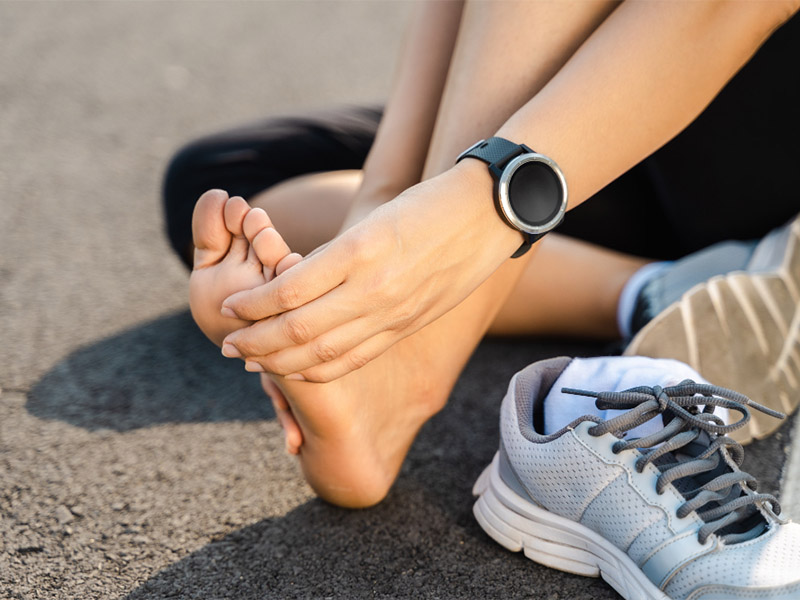
Causes of Morton’s Neuroma
A Morton’s neuroma is thought to be caused by an injury to the nerve, but scientists are still not sure about the exact cause of the injury. The injury may be caused by damage to the metatarsal heads, the deep transverse intermetatarsal ligament (holds the metatarsal heads together) or an intermetatarsal bursa (fluid-filled sac). All of these structures can cause compression and injury to the nerve, initially causing swelling and damage in the nerve. Over time, if the compression/injury continues, the nerve repairs itself with very fibrous tissue that leads to enlargement and thickening of the nerve.
Other causes of injury to the nerve may include simply having an incorrect walking style or an incorrect foot structure, such as overpronation (foot rolls inward), hypermobility (too much motion), or cavo varus (high arch foot) . These biomechanical factors may cause injury to the nerve with every step. If the nerve becomes irritated and enlarged, then it takes up more space and gets even more compressed and irritated. It becomes a vicious cycle.
Signs & Symptoms of Morton’s Neuroma
- Pain (sharp, stabbing, throbbing, shooting)
- Numbness
- Tingling or “pins & needles”
- Burning
- Cramping
- A feeling that you are stepping on something or that something is in your shoe
Initially these symptoms may happen once in a while, but as the condition gets worse, the symptoms may happen all of the time. It usually feels better by taking off your shoe and massaging your foot.
How a Diagnosis Is Made
Your podiatrist will ask many questions about your signs and symptoms and will perform a physical exam. A classic sign of mortons neuroma is a palpable click (Mulder’s click) when compressing the front of the foot. This test may also cause pain to shoot into the toes. This will usually cause pain or it will bring on your other symptoms.
A Morton’s neuroma is usually diagnosed based on the history and physical exam findings, but sometimes other tests such as an x-ray, ultrasound or an MRI are needed.
Treatment Options
- Wear shoes that are wide and deep in the toe box so they do not put pressure on your toes and metatarsals. Avoid wearing high heels because they cause increased pressure on the ball of your foot (forefoot).
- Metatarsal pads: These help to lift and separate the metatarsal heads to take pressure off of the nerve. They are placed just behind where you feel the pain, not on top of the painful spot.
- Activity modification: For example, you may try swimming instead of running until your symptoms go away.
- Taping
- Icing
- NSAIDs (anti-inflammatory medications)
- Arch supports or orthotics: These help to control some of the abnormal motion in your feet. The abnormal motion can lead to extra torque and pressure on the nerve.
- Physical therapy
- Cortisone injection: Helps to decrease the size of the irritated, enlarged nerve.
- Surgery: If conservative treatment does not help surgery may be needed. Surgery may involve cutting out the nerve or cutting the intermetatarsal ligament. Studies have shown surgery has an 80-85% success rate.
Prevention of a Morton’s Neuroma
- Avoid wearing narrow, pointed toe shoes
- Avoid wearing high heel shoes
Pain in the ball of the foot
Pain under the ball of the foot is known medically as “metatarsalgia” and has a variety of causes. The ball of the foot is made up of the five metatarsophalangeal joints (photo), which are the joints where the toes flex and push off the ground. The most common cause of metatarsalgia is abnormal foot structure or function, which leads to excess ground pressure at the ball of the foot. It often occurs with a high arch foot or with contracted toes, also known as hammer toes or claw toes.
Any foot condition that results in excess pressure on the ball of the foot can lead to metatarsalgia. It is also common to have calluses on the ball of the foot, which occur in response to stress but end up contributing to the pain and discomfort. The most common causes of metatarsalgia are:
1. High Arched Foot (Pes Cavus)- A high arch foot does not distribute pressure from walking very well, resulting in excess pressure at the heel and ball of the foot.
2. Loss of Plantar Fat Pad- The plantar surface, or sole of the foot, has a thick layer of connective tissue meant to protect the underlying bones from excess pressure. As we age, this fat pad gets thinner — making the sole of the foot more sensitive to ground pressure as we walk. Gel insoles, arch supports, or custom orthotics for shoes can be used to offset some of the pressure and provide comfort.
3. Trauma-repetitive trauma to joints can lead to bursitis, bone bruising, arthritis, or inflammation of other surrounding tissues. Acute trauma such as a fracture of a metatarsal bone, can cause metatarsalgia. An X-ray or MRI is used to diagnose these injuries.
4. Other Causes of Metatarsalgia or Conditions that Have Similar Symptoms-Neuroma- usually causes pain between or below the third and fourth toes and is caused by nerve irritation and thickening Abnormal Metatarsal Length- metatarsal bone is either too short or too long Painful Sesamoid Bones- These two small bones sit under the first metatarsal bone near the big toe joint and become painful, either from fractures or inflammation of the surrounding soft tissue. Click to See Image of the Sesamoid Bones.
Hallux Limitus- restricted range of motion at the big toe joint (first metatarsophalangeal joint) can cause increased pressure at other metatarsal bones A podiatric evaluation for pain in the ball of the foot may involve X-rays to identify fractures or other bone and joint abnormalities. MRI or other imaging studies may be prescribed to assess the soft tissues for causes of pain such as ligament tears. Treatment will vary depending on the cause but in many cases may involve:
- Cortisone injections or anti-inflammatory medicines to relieve pain
- Shaving down (debriding) calluses to relieve pain.
- Custom-made or off-the-shelf orthotics.
- Padding or special modifications to arch supports or orthotics to relieve pressure under the ball of the foot
- Surgery or alcohol injections to treat a neuroma
Written by Karl Lockett
Book an Appointment



Opening Hours
Monday 8am to 4pm
Tuesday 9am to 7pm
Wednesday 9am to 5pm
Thursday 9am to 8pm
Friday 8am to 5pm
Saturday 9am to 1pm
The Podiatry Centre Sydney © 2026. Suite 1, 18 Gibbs St, Miranda NSW 2228, Australia. 02 9525 8446. ABN 43620670500
Podiatrists serving Miranda, Sutherland Shire, Cronulla, Caringbah, and the surrounding areas.
Treats Plantar Fasciitis Heel Pain.